Grounds of objection
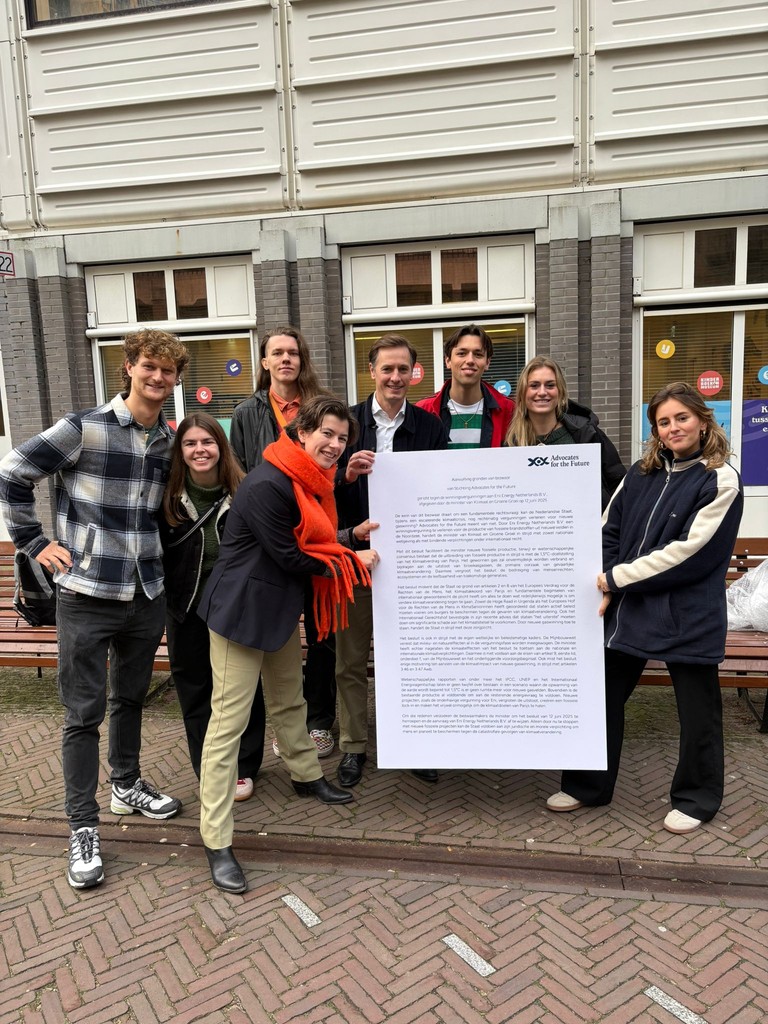
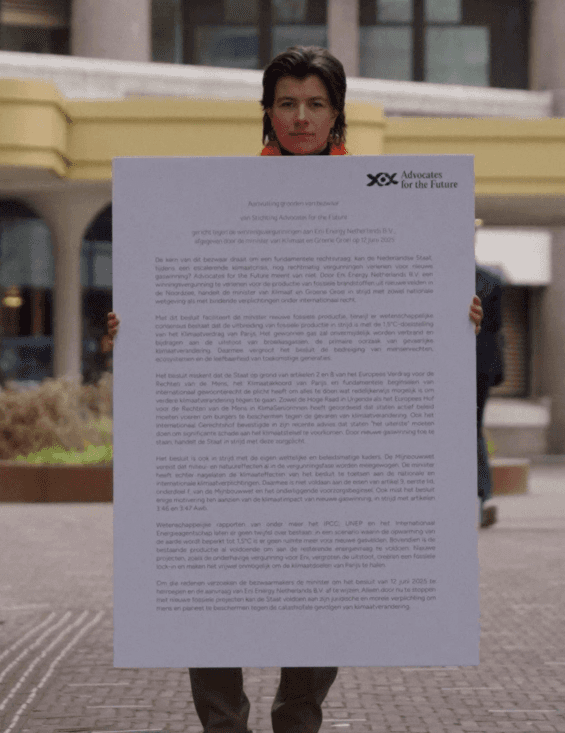
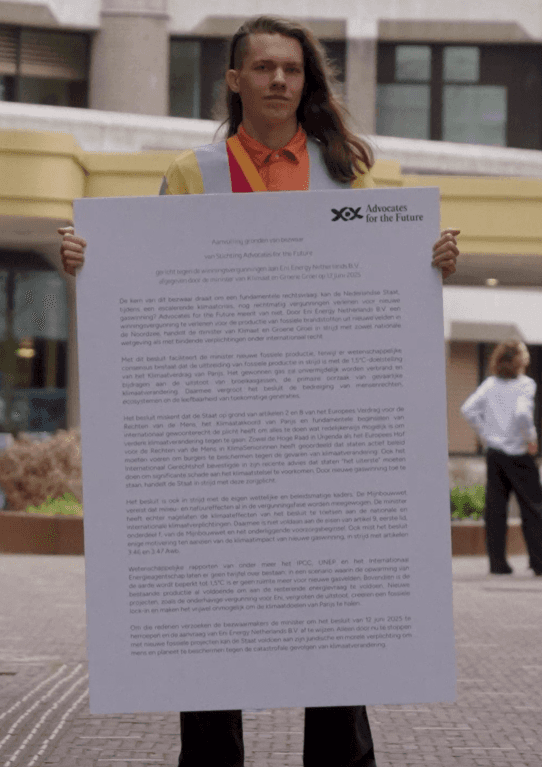
Challenging a permit for the opening of a new gas field, Advocates for the Future filed its grounds of objection.
Read the document
Scientific research from the United Nations Environment Programme (UNEP) and the International Energy Agency (IEA) is unequivocal: to limit global warming to 1.5°C, there can be no new gas fields.
In fact, the IEA confirms that our current gas production capacity is already sufficient to complete the energy transition while staying within climate limits. We are not opposing the use of existing fields, but opening new fields is simply unnecessary.
Despite this clear scientific consensus, the Dutch government is scaling up domestic gas production by approving new fields in the North Sea. This expansion directly violates human rights treaties and international law.
Incompatible
with the 1.5°C limit
Lock-in effect
due to investments in gas infrastructure
Delay
in the shift to renewables


New gas projects increase emissions and make it virtually impossible to keep global warming below 1.5°C. Recent research shows that the remaining global carbon budget is rapidly shrinking, with global temperatures already approaching the 1.5°C threshold.
The currently planned global production of fossil fuels, and gas in particular, already vastly exceeds the production levels consistent with limiting warming to 1.5°C, or even 2°C. This leaves the Dutch State, as well as other nations, with no room to expand gas production. In fact, a recent study concludes that the Dutch licensing policy for gas extraction is "grossly unaligned" with the goals of the Paris Agreement.
Investing in new gas infrastructure creates a structural "lock-in" effect: it delays the transition to sustainable energy, entrenches the use of fossil fuels, and generates strong economic incentives to prolong extraction.
As research shows, once capital is invested in a new gas field, producers are heavily incentivized to continue operations. Because these substantial initial investments constitute "sunk costs", they are economically compelled to maximize extraction over the long term simply to recover their capital.
To ensure a swift transition away from its current reliance on fossil fuels, the Netherlands should be investing in sustainable solutions. Approving new gas fields, however, structurally binds the energy system to fossil fuels, actively hindering the necessary acceleration toward renewable energy.
"When cheap gas keeps flowing from the ground, neither industry nor consumers will make the necessary investments in sustainable alternatives."

Hannah Prins, Campaign Coordinator

Advocating for the clear rulings of several authoritative judicial bodies on what is needed to combat the climate crisis to be fully respected and upheld.
A recognition in the Netherlands that further expansion of gas fields is legally untenable would not only limit domestic expansion but also set a powerful global precedent.
By preventing new fossil infrastructure, we aim to advance the phase-out of fossil activities and accelerate the shift towards sustainable energy systems.
The International Court of Justice recently ruled that countries must do "the utmost" to limit global warming to 1.5°C, with historically high emitters like the Netherlands bearing the greatest responsibility. Yet, the Dutch government issued permits for new gas extraction. That is why Advocates for the Future is challenging these permits.
Approving new gas fields ignores the scientific consensus that expanding fossil production violates the 1.5°C target of the Paris Agreement. The extracted gas will inevitably be burned, contributing to climate change. Consequently, granting these permits exacerbates the threat to human rights, ecosystems, and the livability of our planet for future generations.
Issuing these permits disregards the State's duty under the European Convention on Human Rights, the Paris Agreement, and fundamental principles of customary international law to do everything reasonably possible to prevent further climate change. Landmark rulings including those from the Dutch Supreme Court in the Urgenda case and the European Court of Human Rights in the KlimaSeniorinnen case, confirm that states must implement active policies to protect citizens from dangerous climate change. By authorizing new gas extraction, the State acts in direct violation of this duty of care.
The UK recently announced it will no longer issue permits for new oil and gas fields in the North Sea. This demonstrates that Western governments are recognizing there is a line that must not be crossed. It is time for the Netherlands to follow suit.
"We want to help build the legal pathway towards a livable future. New gas projects don't fit in the world of tomorrow based on international law."

Hanneke Schreur, Lawyer
As a non-profit organisation, we rely on your support. Your support will enable us to undertake bold and ambitious projects that shed light on the most pressing issues of our time and bring about meaningful change.